
🚨 I’ll be live at 11 a.m. ET🚨
Stop stressing about the Sunday night open and join us to learn the one 2026 confirmation signal that keeps our trades green [tap to join us]!
If you’re relying on price action alone, you’re missing half the picture. Market internals like the Advance-Decline Line (ADD), TICK, and VOLD give you a deeper view of what’s happening beneath the surface — and using them together can significantly improve your trading.
Here’s how each works, and why you should never look at them in isolation.
ADD: The Market’s Steering Wheel
The ADD measures the net difference between advancing and declining stocks. If the ADD is rising, more stocks are moving higher. When it’s falling, more are in decline. Simple enough, but don’t stop there.
Just because the ADD points up doesn’t mean the market’s in great shape. Without momentum behind those moves, the rally might not last. That’s where TICK comes in.
TICK: The Gas Pedal
While ADD shows you direction, TICK tells you if there’s momentum. It measures how many stocks are ticking up or down in real time. If the ADD is climbing but TICK readings are flat or negative, the market may look strong on the surface but lacks real buying power.
It’s like steering your car toward a destination but not pressing the gas pedal — you won’t get far.
VOLD: The Market’s Engine
VOLD tracks the volume in advancing versus declining stocks. It’s the horsepower behind the move. If the ADD is up and TICK shows momentum, but VOLD is weak, there’s no real conviction behind the rally.
You want to see all three indicators align. When they don’t, that’s your warning sign.
Using ADD, TICK and VOLD Together
Let’s say the S&P 500 (SPY) gaps up at the open. The ADD is rising, suggesting broad strength. But when you check TICK, it’s flat. Then you look at VOLD and see volume isn’t supporting the move.
That’s a red flag. Despite the gap up, there’s no real buying pressure. If you went long based on price alone, you’d likely get caught in a rally that fizzles out.
But if ADD, TICK, and VOLD are all moving in sync? That’s a high-confidence setup.
Common Mistakes Traders Make
Too many traders focus on just one of these indicators. They’ll see the ADD rising and assume the market’s strong without checking if TICK or VOLD confirm. Or they’ll spot momentum in TICK but ignore the broader market direction.
The trick is to use these tools together. ADD is your steering wheel, TICK is your gas pedal, and VOLD is the engine. Ignore one, and you’re flying blind.
If you’re not using ADD, TICK, and VOLD in your trading, you’re missing critical information. These indicators give you a look under the hood — showing you if the market’s strength is real or just an illusion.
So next time you’re ready to make a trade, don’t just look at the price chart. Check the internals. When they align, you’ve got a solid trade. When they don’t, it’s time to wait.
Roger Scott
Roger Scott Trading
Follow along and join the conversation for real-time analysis, trade ideas, market insights and more!
- Telegram: https://t.me/+_vmfwkeP8fA5YWQ5
Important Note: No one from The TradingPub team or Roger Scott Trading will ever message you directly on Telegram.
*This is for informational and educational purposes only. There is inherent risk in trading, so trade at your own risk.
P.S. Your Sunday Morning Reality Check Starts SOON
I’m sitting in my home office staring at a 2026 chart that looks like a crime scene. Most traders are currently stressing about what’s going to happen when futures open tonight.
Don’t be that person.
I’m hopping on the mic at 11 a.m. ET today to show you the one signal that’s kept us green while the rest of the world is seeing red. If you’ve ever felt like the market is specifically out to get your stop loss, this session is for you.
Here is the deal:
- No “rah-rah” speech: I’m not here to pump you up. I’m here to show you a confirmation signal.
- No fluff: We’re looking at real trades from 2026. The good, the bad, and the one loss we actually took.
- The “Monday Edge”: You’ll walk away with a specific rule you can apply the second the market opens tomorrow.
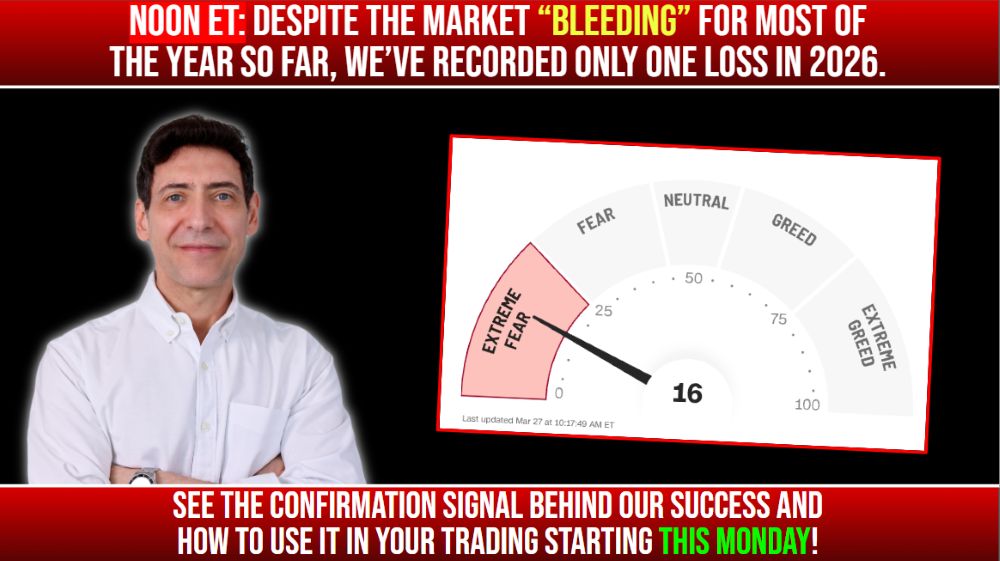
The room is filling up so come hang out, ask me anything and let’s actually make a plan for once.
The profits and performance shown are not typical, we make no future earnings claims, and you may lose money. From 7/15/24 through 3/27/26, the average win rate on live published trade alerts is 79.41%. The average return on options trades was 4.86% over a 10-day average hold time.