
🚨 I’ll be live at noon ET🚨
We’ll analyze markets and I’ll give my top stocks, then we’ll cover the types of trades we take in the Trading Pit, an example of a “gravity trade,” the types of options for different types of trades and more [tap to join us for the VIP Trade Room]!
When I walk into the office on a Monday morning, I treat it exactly like a Friday — and I keep that mindset until about 3 p.m. ET. Most traders assume Monday is the real start of the week, the moment to jump into fresh moves, but decades of market data tell a different story.
In fact, a long-running New York University analysis found that Monday delivers the lowest average returns of any trading day across every major international market.
That’s not a coincidence. It’s structural.
Institutions spend Monday morning doing something far less glamorous than initiating big new positions. They’re cleaning house. Mutual funds and portfolio managers come back after the weekend with three days of news to digest, so the first order of business is rebalancing.
They sell what no longer fits, adjust risk exposure and equalize positions with their peers. That creates movement — but not conviction.
This is exactly why the worst mistake retail traders make is reacting to Monday morning action as if it’s meaningful. Most Main Street traders chase the first directional push they see, only to find out it was nothing more than institutional housekeeping. That kind of impulsive behavior is what consistently puts them on the wrong side of the market.
The smarter move is patience. And the payoff is real. If you compare the long-term returns of different weekday entry points, the difference is staggering. One simple comparison of 30-year performance shows that a trader buying at the start of the week and selling the next day ends up with a tiny fraction of what a trader earns by entering just one day later.
The gap isn’t theoretical — it’s hundreds of thousands of dollars over time.
The Global Pattern Behind the Monday Effect
This Monday pattern isn’t new. It’s been consistent for nearly a century, surviving everything from the Great Depression to modern algorithmic trading. The Monday afternoon anomaly has stayed intact since 1927, which is one of the longest and most robust backtests I’ve ever seen.
And it doesn’t matter whether the market is above or below the 200-day moving average — the edge shows up in bull and bear environments alike.
That’s why I don’t get rattled by Monday morning pullbacks. Most people see a stock drop sharply and panic, but in reality that kind of move is often a gift. Once institutions finish clearing out what they don’t want, they start buying what they do want — and that transition usually starts showing up between 2:30 and 3:40 p.m. ET.
How to Put This Into Practice
If you want to follow this approach, keep it simple. Slow down Monday morning, let the noise play out and focus on the window when real accumulation typically begins. A practical starting point is watching for your setup in the last hour of the session, ideally around 3:20 to 3:40 p.m.
This rhythm works especially well for traders who don’t want to sit in front of screens all day. There’s no day trading pressure, no rapid-fire decisions and no complicated execution. It’s a straightforward, beginner-friendly way to trade with institutional flow instead of fighting it.
If you want to see how I trade Monday morning turnarounds, check this out!
I hope that helps!
Roger Scott
Roger Scott Trading
Follow along and join the conversation for real-time analysis, trade ideas, market insights and more!
- Telegram:https://t.me/+_vmfwkeP8fA5YWQ5
- YouTube:https://www.youtube.com/@Roger-Scott/videos
- Instagram:https://www.instagram.com/thetradingpub/
- Facebook:https://www.facebook.com/TheTradingPubOfficial
- Twitter: https://twitter.com/Rogerscott1970
Important Note: No one from The TradingPub team or Roger Scott Trading will ever message you directly on Telegram.
P.S. If You Missed My State of the Market Briefing…
Hi, Roger here.
The U.S. and Iran look set to make “another agreement.”
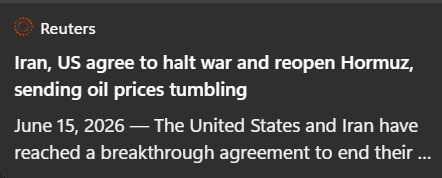
But what happens when one party double-crosses the other?
We’ve seen this pattern over and over. And it’s casting uncertainty over the air….
That’s why I decided to hold an urgent state-of-the-market briefing to give my views on what I see coming next…
I shared my predictions on interest rates, oil, gold, crypto, and a shocking S&P 500 price forecast you can’t afford to miss…
I also shared my No. 1 stock pick for June…
A stock I expect to do well, regardless of the next Middle East headline…
Because I’ve spotted unusual buying activity on this ticker from our “friends” on Wall Street…
Now I won’t make reckless guarantees when it comes to the stock market…
But if you’d like to watch my urgent state-of-the-market briefing…
Hear my predictions…
And get my No. 1 stock pick for June free…

