
🚨 I’ll be live at 1:30 p.m. ET 🚨
Stonkamania is off today but we’ll run through K.I.R.A. at the usual time, so drop on by if you haven’t seen it in action yet [tap to join us]!
I may be about to blow up everything you’ve been taught about trading options. After almost 15 years of doing this professionally, I can tell you something that’s going to make your textbook-loving head spin: Never use stop losses for options.
Stop losses on options simply aren’t part of the institutional playbook.
I know the books tell you to use them. But here’s the reality — no one on the professional side uses stop losses on options. Ever. And I’ve got the perfect example to show you why that outdated advice will cost you money.
Instead of worrying about stops, we control how much I risk before the trade starts. For example, I’d rather put on 10 contracts of a 90-cent option and only tie up $900.
That $900 is my max risk and I know that going in — no stop needed. Cheap options let you size correctly from the start without ever inviting a broker-triggered disaster.
The Trade That Proves My Point
Here’s a trade that perfectly demonstrates why stop losses can wreck your results. Say a stock went from $26.50 down to $25.50, a roughly 4% drop. Any trader using a stop loss would’ve been stopped out right there, locking in a loss like a sucker.
True story — that drop would’ve tripped most stops, then the stock reversed and the trade turned into a monster. Traders were hitting 40% to 50% on the options.
Stops would have kicked you out before the move.
That’s exactly why stop losses make no sense on options. They’re time-sensitive instruments. If the stock goes down or even stays flat, they’ll erode. If the trade works, it often works fast and violently. Managing options with long-term stock holding tools is a recipe for losing.
Here’s how I do it instead — I set sell orders at 20-25%, then 50% to take profits off the table, then let a small runner ride for the home run. This way, I bank profits systematically without guessing. And as your position grows, so does your real mark-to-market risk, so trimming as the trade goes your way keeps the account stable without sabotaging the upside.
Position Sizing Beats Stop Losses Every Time
The real secret to managing risk in options is simple: Size your positions correctly. That’s it. Keep your position sizing in check so a couple of losses don’t blow up your account. That’s your risk management.
When your maximum loss is defined upfront, adding a stop loss only introduces unnecessary noise that can kill good trades.
Options already have a built-in stop — expiration. Your risk is the premium you paid. So instead of using artificial exits that trigger during normal volatility and getting shaken out of your position, focus on structuring trades you can hold through the chop.
Another hidden danger: Market makers can widen the bid-ask in volatile moves, making stop orders fill at terrible prices. You don’t want a machine dumping your position at the worst moment simply because the spread went haywire for a few seconds.
Position sizing, smart scaling and predefined profit targets will always beat rigid stop losses. Size appropriately, let the trade work and manage profits as they come in.
Order Flow:
This is for informational and educational purposes only. These are not official alerts issued by Lance, but rather some interesting orders picked by the team at Lance Ippolito Trading.
When you look at these plays, always take the market maker move into consideration.
You can be right on the direction but still lose money if the stock doesn’t move enough. That’s where the market maker move comes in clutch.
With puts, they’re often downside hedges in case a stock tanks, especially around earnings. The further out of the money they are, the more likely they are to be hedges.
Also be sure and check when the company’s earnings date is because many of the plays we post here are centered around earnings!
If a stock is really expensive, consider a spread to lower the cost.
And finally, always remember the golden rule when it comes to buying calls: Buy dips, sell rips — and don’t chase!
If a stock’s moved a ton already today, maybe wait for a pullback.
There is inherent risk in trading. Trade at your own risk.



Note: If no date is listed after the month, it’s the monthly expiration (third Friday).
The team at Lance Ippolito Trading
Lance doesn’t want the CCP spying on him, so you’ll never find him on TikTok. Same goes for other social media sites, which are filled with impersonators, scammers and crypto bros.
You can only find him on his personal YouTube Channel — smash that Subscribe button! https://www.youtube.com/@LanceIppolito
And in his private Telegram channel: https://t.me/+-gVwEIwGJhplMTgx
Important Note: No one from the team at Lance Ippolito Trading, New Money Crew or any of its associated brands will ever contact you directly on Telegram.
*This is for informational and educational purposes only. There is inherent risk in trading, so trade at your own risk.
P.S. Grab Access to K.I.R.A. Today at No Charge
Algorithmic trading has been a tool reserved only for the highest bidder — aka Wall Street.
By deploying robots that handle both analysis and execution, they’ve been able to completely remove the human emotional element…
Allowing them to take advantage of opportunities retail traders wouldn’t even know existed.
At lightning speed, they’re in or out of their positions before their move even has the chance to register on the charts.
That’s why instead of the regular lagging indicators, I built K.I.R.A.
With the power of AI, it’s taken pattern recognition and financial forecasting to a level that’s never been seen before.
Giving retail traders the opportunity to get in on moves that would typically go right over their heads.
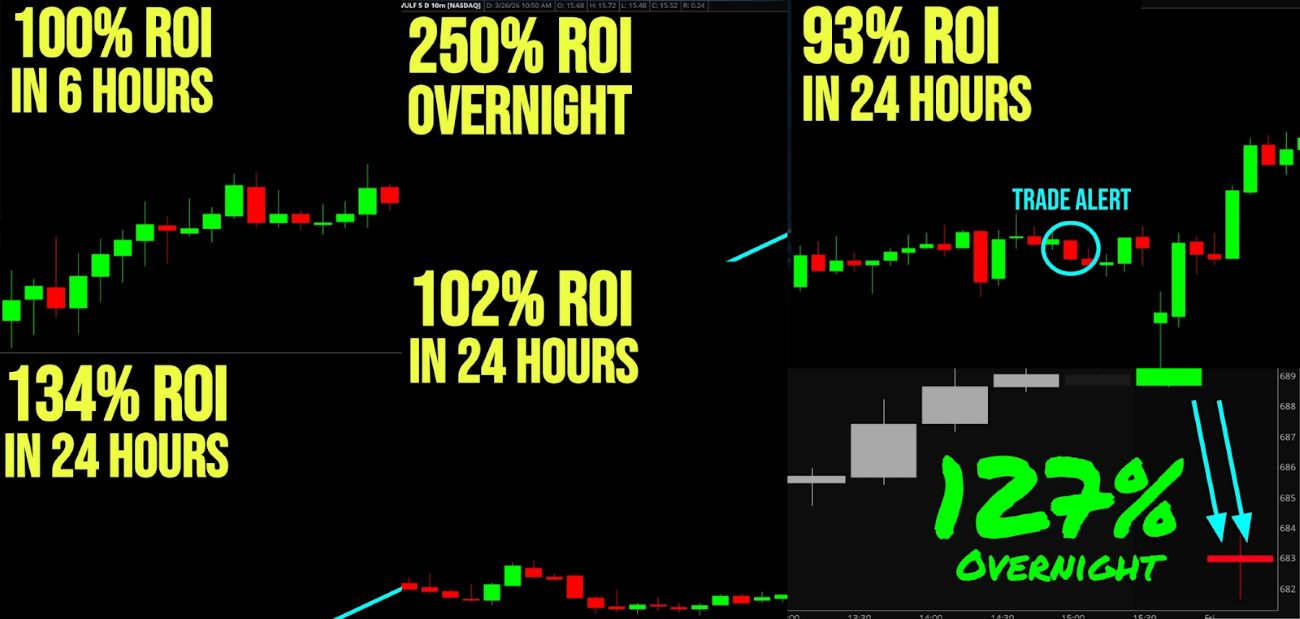
Of course, there were smaller wins and trades that went against us — there’s no such thing as a guarantee in trading and you can lose money.
But I’d like to show you exactly how K.I.R.A. is able to tip you off to some of the market’s best opportunities.
As a bonus, I’ll hand you complementary access to K.I.R.A. so you can try it out for yourself!
If you like the sound of that…
We develop tools and strategies to the best of our ability, but no one can guarantee the future. There is always a risk of loss when trading. past performance is not indicative of future results. Stated results are from Live tracked signals From 2/25/26 to 4/25/2026. The win rate has been 89% on the options with an average return of 80% over a two-day hold time.