🚨Opening Playbook is live at 3:30 p.m. ET🚨
I’m out today but Nate’s giving an update on the new Fed Chair Kevin Warsh, then he’ll discuss Home Depot earnings and what it will tell us, MAG7 money is back and more [tap to join Closing Playbook]!
There’s a fundamental misunderstanding about bid-ask spreads that costs traders money every single day. Most people assume that when markets are active and liquid, spreads widen.
But the reality is the opposite — and understanding why will change how you read market conditions. Let’s break down what’s actually happening behind those numbers on your screen.
Market makers don’t make money by holding positions — they make money through inventory turnover. They buy an option, immediately hedge it, then flip it to the next buyer.
That cycle repeats all day. Once they hedge a trade, price movement doesn’t help them and they aren’t making anything on decay because the hedge neutralizes it.
Their only reliable profit comes from the spread itself.
This is also why liquidity plays such a powerful role. When turnover is high, market makers can keep spreads tight because small profits per trade add up quickly. When volume dries up, they need to make more per transaction just to justify the risk. Low liquidity forces spreads wider, not because anything is wrong with the underlying asset but because the business math changes.
Think of it like a bookmaker in Vegas. When the odds are clear and flow is steady, margins stay tight. But when uncertainty rises — or when action becomes uneven — the house widens its margins to create a safety buffer.
The mechanics in options markets aren’t much different. When the landscape feels unpredictable, spreads widen to protect the market maker’s book.
When Uncertainty Forces Protective Positioning
The second common driver of wide spreads is sudden uncertainty. A surprise headline hits, an unexpected statement crosses the wire, or a sharp move occurs before market makers have time to reprice or hedge.
In those moments, they widen spreads to avoid being forced into trades that expose them to unknown risk. They’ll make you pay up if you’re buying, and they’ll bid low if you’re selling because they haven’t had time to assess what has changed.
And sometimes wide spreads have nothing to do with the market at all. Certain desks restrict trading when senior traders are unavailable, leaving junior staff instructed to avoid activity.
The easiest way to accomplish that is by making spreads unattractive until leadership is back. Traders often misinterpret these moments as market signals when they’re really just internal risk controls.
At the end of the day, a wide spread should make you pause. It’s almost never a bargain signal — it’s a warning that something about the environment isn’t conducive to smooth price discovery.
How to read wide spreads:
- Low liquidity limiting turnover
- Sudden uncertainty or unpriced risk
- Desk constraints or internal restrictions
Kane Shieh
Kane Shieh Trading
Follow along and join the conversation for real-time analysis, trade ideas, market insights and more!
Important Note: No one from The TradingPub team or Kane Shieh Trading will ever contact you directly on Telegram.
*This is for informational and educational purposes only. There is inherent risk in trading, so trade at your own risk.
P.S. How I ‘Front Run’ Wall Street’s Next Moves
Thanks to a hidden force that drives some of the BIGGEST and most repetitive moves in stocks…
The average trader can now target 100% in five days or less without spending hours on technical analysis…
Without reading boring fundamental reports…
And without monitoring the markets 24/7.
I call this hidden force a Gamma Pocket.
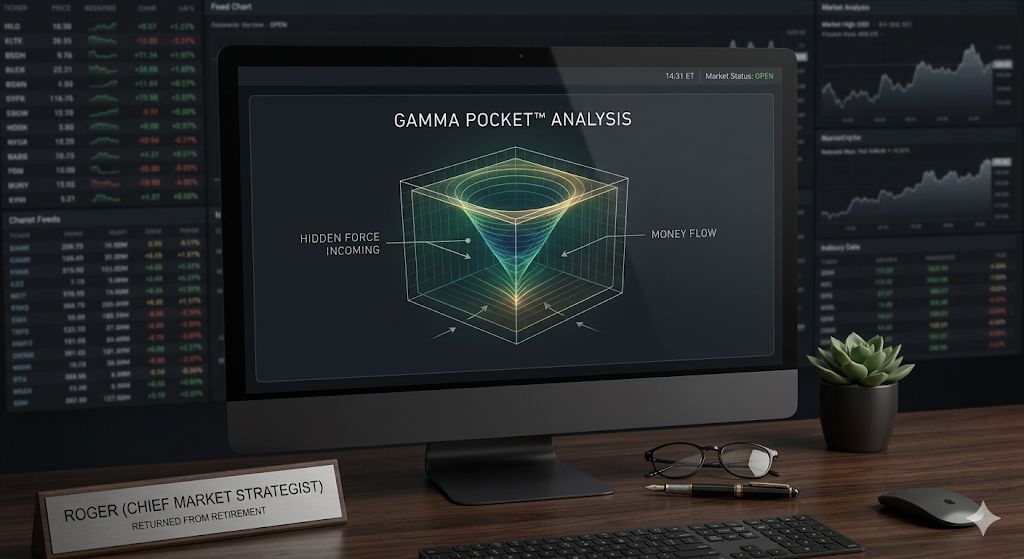
And it’s one of the reasons why I came out of retirement to expose the biggest breakthrough I’ve seen in my entire career.
You see…
With Gamma Pocket Payouts, we can now front-run some of Wall Street’s largest buy orders on certain stocks…
Including AAPL, NKE, CAT, AMZN and a host of others.
Now, these are just a few…
As a matter of fact, I just discovered a ticker Wall Street could be forced to buy like crazy…
If you want to know how I’m planning to trade these gamma pockets…
We develop strategies, but we cannot guarantee a future return. There is always a risk of loss when trading. Past performance is not indicative of future results. The results shown are from LIVE signals published in real time from 1/4/24 – 5/15/26. The result was a 72.79% win rate, a 35.47% average return (winners and losers), and an 61% average win with a 7-day hold time.