Most traders look at options that cost a few pennies and think they’ve found a bargain. They see the potential for a 100% or 200% return if it moves just a few cents, and they’re ready to load up.
Here’s what they’re missing…
That penny option may be one of the market’s most expensive trades when measured by implied volatility.
Implied volatility (IV) represents the market’s estimate of future movement, so it sounds like there should be one IV for the S&P 500 (SPY). In theory, options with identical expiration dates might have uniform IV across strikes…
But real markets don’t work that way.
The Smile-Shaped Truth About Option Pricing
IV changes across strikes, forming what traders call a volatility smile or skew. At-the-money options often have relatively low IV while deep in-the-money (ITM) options and far OTM options can carry much higher readings.
Why would expectations for the same underlying differ?
Each strike has its own supply, demand, liquidity and exposure to extreme moves. Investors may pay more for downside protection while speculators chase cheap upside calls.
Market makers adjust prices to reflect that order flow, tail risk and the difficulty of hedging less-liquid contracts. When those prices are entered into an options model, they produce different implied volatilities.
Suppose SPY trades near $770. An ATM call might cost $2.00 with 17% IV while a $790 call costs only one cent with 33% IV. The second contract requires far less cash, but you’re paying nearly twice the volatility assumption for a much smaller chance of expiring above the strike price.
Even if that penny option rises to two cents, the quoted return is 100%. But a one-contract buyer gains only $1 before fees and must overcome a potentially wide bid-ask spread. If SPY fails to make a large move quickly enough, time decay can erase the entire premium.
What Market Makers Understand
Market makers know traders are drawn to low prices and eye-popping percentage gains. Their quotes account for demand, hedging costs and the risk of a sudden move. That doesn’t guarantee every far OTM option is mispriced, but it does mean a low premium isn’t the same as good value.
Before buying, compare IV across strikes with the same expiration. Then check the bid-ask spread, breakeven price, time remaining and probability of expiring above the strike. Also test what happens if SPY moves in your direction but IV falls.
So today’s lesson is simple…
Stop judging options by premium alone. A one-cent contract can require a far more dramatic outcome than a $2.00 ATM option, making the apparent bargain an expensive lottery ticket.
Kane Shieh
Kane Shieh Trading
Follow along and join the conversation for real-time analysis, trade ideas, market insights and more!
Important Note: No one from The TradingPub team or Kane Shieh Trading will ever contact you directly on Telegram.
*This is for informational and educational purposes only. There is inherent risk in trading, so trade at your own risk.
P.S. Graham Just Release a Critical Market Update
If you’ve been watching the tape this month, you know volatility is creeping back in…
With institutional volume shifting, the window for high-octane opportunities inside open.
No wonder his Newton Software has been going haywire — and now it’s triggered three new alerts.
The last time Newton flashed a triple-alert cluster like this?
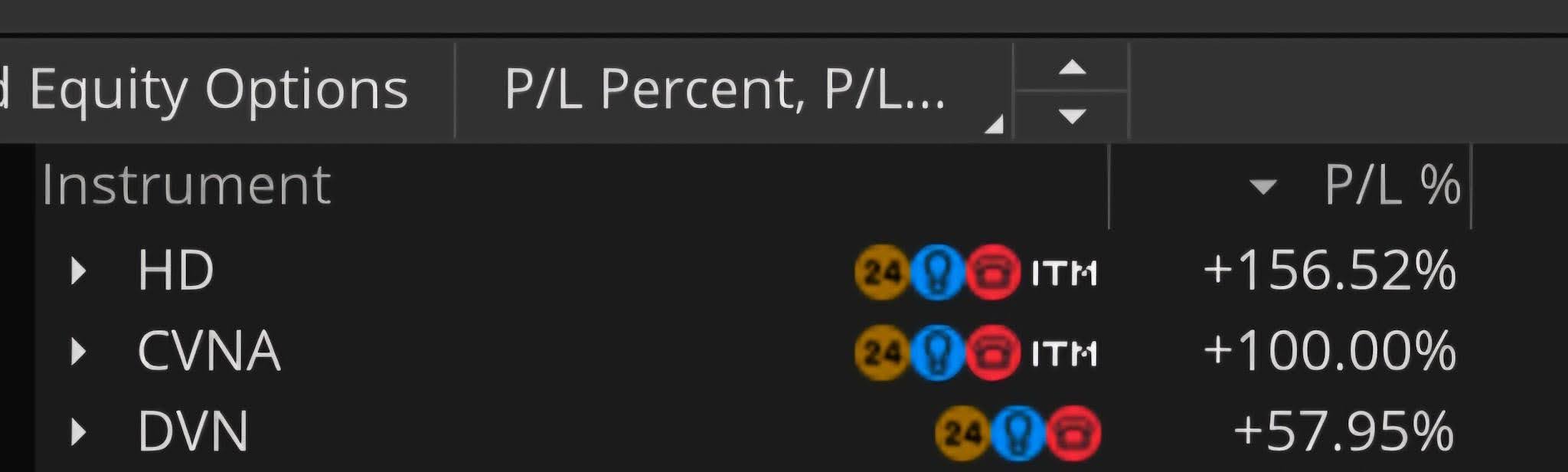
Now, we’re not saying today’s alerts will perform exactly the same. Markets don’t work that way, and we can’t make guarantees.
But the setup is eerily similar.
He’s laid out the full breakdown, including tickers, entry zones and the specific options contracts he’s looking at…
You can access that briefing completely free right here.
The market doesn’t wait…
We develop tools and strategies to the best of our ability, but no one can guarantee the future. There is always a risk of loss when trading past performance is not indicative of future results. The trades expressed today are based on signals from Graham’s Software with the benefit of 20/20 hindsight unless otherwise stated and must be considered hypothetical. There’s bound to be winners and loser along the way. Since this new dashboard is a tool for traders and not a trading service, profits and performance will vary among users. Never risk more than you can afford to lose.