
🚨 I’ll be live at 2 p.m. ET🚨
The latest data reveals that the market rarely moves more than 0.5% per day on average — see how to turn these daily moves into daily payouts and more [tap to join him]!
Keltner Channels can be one of the most practical tools for timing entries and exits on the S&P 500 — especially when volatility is low and price action gets choppy.
Unlike Bollinger Bands, which are based on standard deviation, Keltner Channels use the Average True Range (ATR) to measure how far price deviates from a moving average. That makes them especially useful when market behavior is driven by expansion and contraction of range rather than sudden spikes.
How Keltner Channels Work
The standard setup uses an exponential moving average — typically the EMA 20 — with bands one ATR above and below. But for short-term trades, the EMA 8 (eight-day exponential moving average) gives a much cleaner read. When price extends beyond the upper band, it’s statistically stretched.
When it drops below the lower band, it often signals fear or a temporary washout.
Because ATR includes gaps, Keltner Channels adapt well to fast-moving or irregular markets. On SPY, for example, price rarely holds above +1 ATR for more than five or six sessions before reverting to the EMA or lower.
That gives traders a built-in timing window for short-term reversion setups.
Smarter Entries and Exits
For long setups, the most favorable entries typically come on pullbacks to the EMA — or better yet, the -1 ATR zone. That lowers the risk of getting stopped out on random noise and sets up favorable risk-reward when targeting +1 or +2 ATR moves.
On the flip side, when SPY is hugging the +1 ATR band for days, the clock is ticking. These conditions often lead to a pullback, especially when price stretches toward +2 ATR.
That’s not a great time to start new longs, but it may offer a clean short-term fade or hedging opportunity for nimble traders.
Using Keltner Channels this way gives you a defined edge — not just in spotting stretch points, but in quantifying how far a move is likely to go before mean reversion kicks in.
Kane Shieh
Kane Shieh Trading
Follow along and join the conversation for real-time analysis, trade ideas, market insights and more!
Important Note: No one from The TradingPub team or Kane Shieh Trading will ever contact you directly on Telegram.
*This is for informational and educational purposes only. There is inherent risk in trading, so trade at your own risk.
Leverage the Market’s ‘Rush Hour’ for Next-Day Payouts
When closing-hour liquidity floods the market between 3-4 p.m. ET…
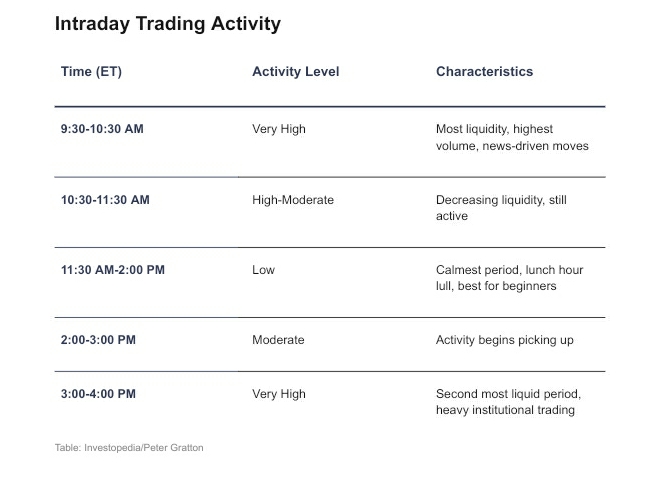
Some traders are cashing in on this time frame to target next-day payouts on a specific kind of trade…

