🚨I’ll be live at 3:30 p.m. ET with Nate🚨
We’ll cover how I pin the market’s closing price, current risks in the market, what my break market disks are showing and more [tap to join us for Closing Playbook]!
Every trader takes losses. Some are manageable. Others hit hard enough to change how you approach the next opportunity.
But the loss itself is only part of the danger. What matters more is what happens next in your head.
After taking a couple of consecutive losses, it’s easy to say, “Let me be conservative. Let me scale down. Let me change my plan.”
That reaction may feel like prudent risk management, but often it’s fear disguised as discipline. Before changing your approach, you need to stop and ask yourself one critical question.
Are the Risks That Hurt You Still Present?
The key is distinguishing between legitimate ongoing risk and past trauma that’s clouding your judgment. When you take a loss, assess whether the conditions that caused it are still in play.
If they’re not, then whatever fear you’re feeling isn’t about the market — it’s about you.
Consider the risk of holding a position over a weekend. If unexpected news breaks while the market is closed, the stock can gap sharply before you have a chance to react. Intel (INTC), for example, once announced price increases over a weekend, pleasing investors and affecting the stock when trading resumed.
That kind of incident highlights a real risk: You can’t manage a position while the market is closed. But once the event has passed, you need to evaluate the next setup on its own terms rather than assume the same outcome will happen again.
So if you’re hesitating on the next trade, be honest about why. Is there an actual risk you need to manage, or are you simply afraid of getting hurt again?
Those are two completely different things. You can’t let past trauma dictate your decisions in the present moment — not in trading, relationships or any other part of life.
This doesn’t mean ignoring risk. Economic reports, central bank decisions, company announcements and weekend gaps still require awareness and proper planning.
But those are current risks you can manage — not ghosts from previous trades.
The Framework That Keeps You Objective
Here’s the discipline: Acknowledge the loss, process it and then evaluate current conditions objectively. You can’t pretend the loss didn’t happen, but you also can’t let it control your next move.
The situation in front of you is rarely a perfect replay of what happened before. Each setup has its own conditions, risk profile and potential. The lesson from a past loss should improve your analysis — not replace it.
Real discipline means identifying what’s different, determining whether the original danger remains and adjusting only when the evidence supports it. Fear changes the plan because losing hurts. Discipline changes the plan because current conditions demand it.
The worst thing you can do is make decisions from a place of fear. You might occasionally get lucky if conditions repeat, but that’s not a strategy — it’s chance.
Keep moving forward. Identify the risks that are present now, create a plan to manage them and execute when there’s a solid setup.
That’s the difference between trading scared and trading smart.
Kane Shieh
Kane Shieh Trading
Follow along and join the conversation for real-time analysis, trade ideas, market insights and more!
Important Note: No one from The TradingPub team or Kane Shieh Trading will ever contact you directly on Telegram.
*This is for informational and educational purposes only. There is inherent risk in trading, so trade at your own risk.
P.S. Citadel’s Research Note Revealed a Massive Market Shift
About $6.2 trillion is scheduled to move through Wall Street in a single afternoon this Friday.
If you count the days leading up to it, we are looking at $9.6 trillion in total options exposure wiping off the board.
According to a note from Citadel Securities, that is roughly 35% of the entire U.S. options market expiring all at once.
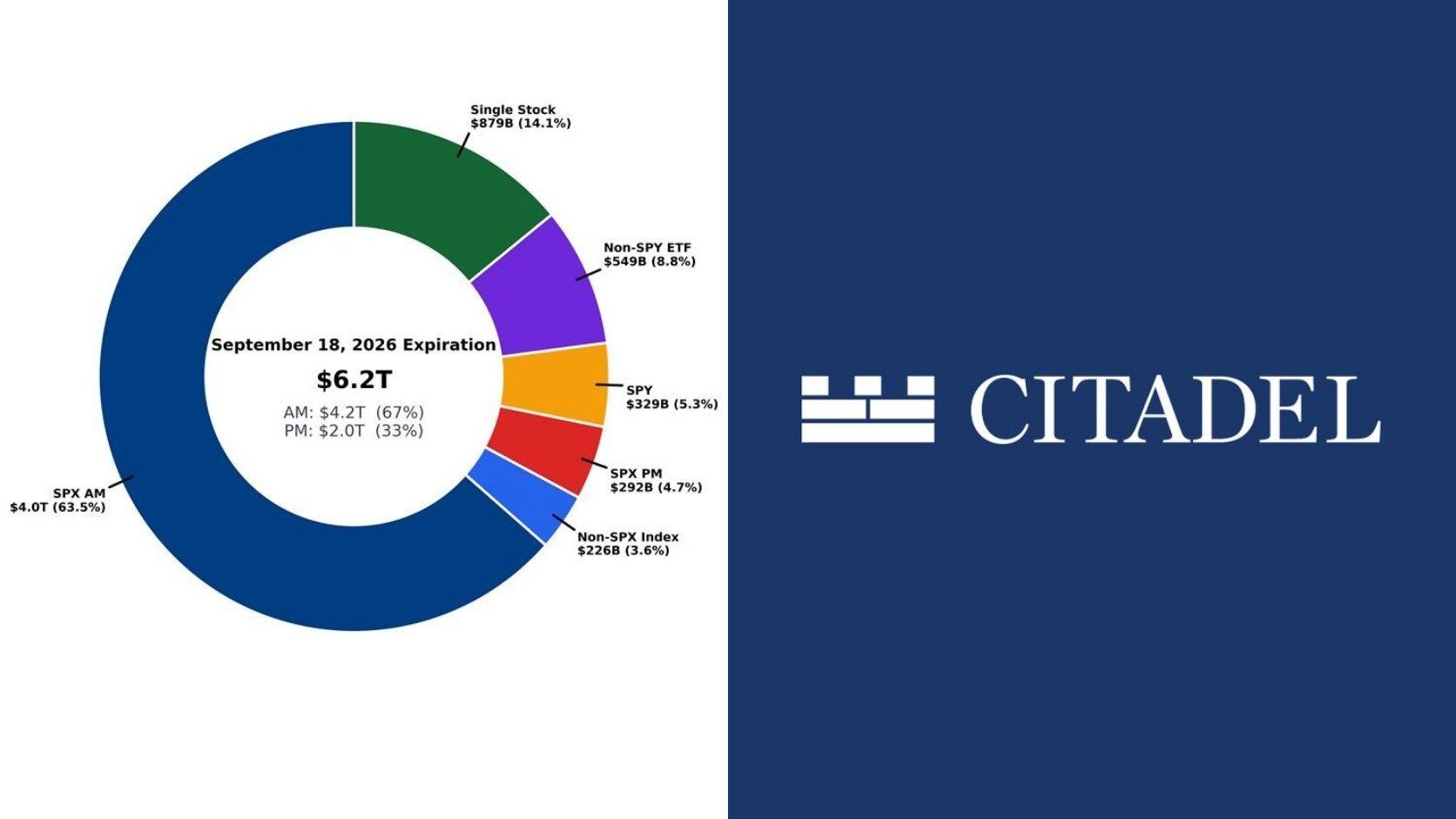
It completely shatters the previous record of $7.7 trillion set back in June.
When stock options, index options, and index futures all expire at the exact same moment, Wall Street calls it triple witching.
It creates a massive technical reset for the entire market.
Now, a lot of traders see a date like this on the calendar and do not know what to make of it.
I look at it and see the single biggest trading setup of the season.
You see, for the past several months, I have been tracking a quiet phenomenon inside the S&P 500.
It gives us a remarkably accurate signal on where the stock market is going to close each day… specifically during that final hour of trading.
When you can tell where the market wants to settle before the clock runs out, you do not need to hold positions for days or weeks hoping things go your way.
You can target what I call “One Hour Jackpots.”
That helps us consistently target 2x and 3x opportunities in that final 60-minute window, like these…
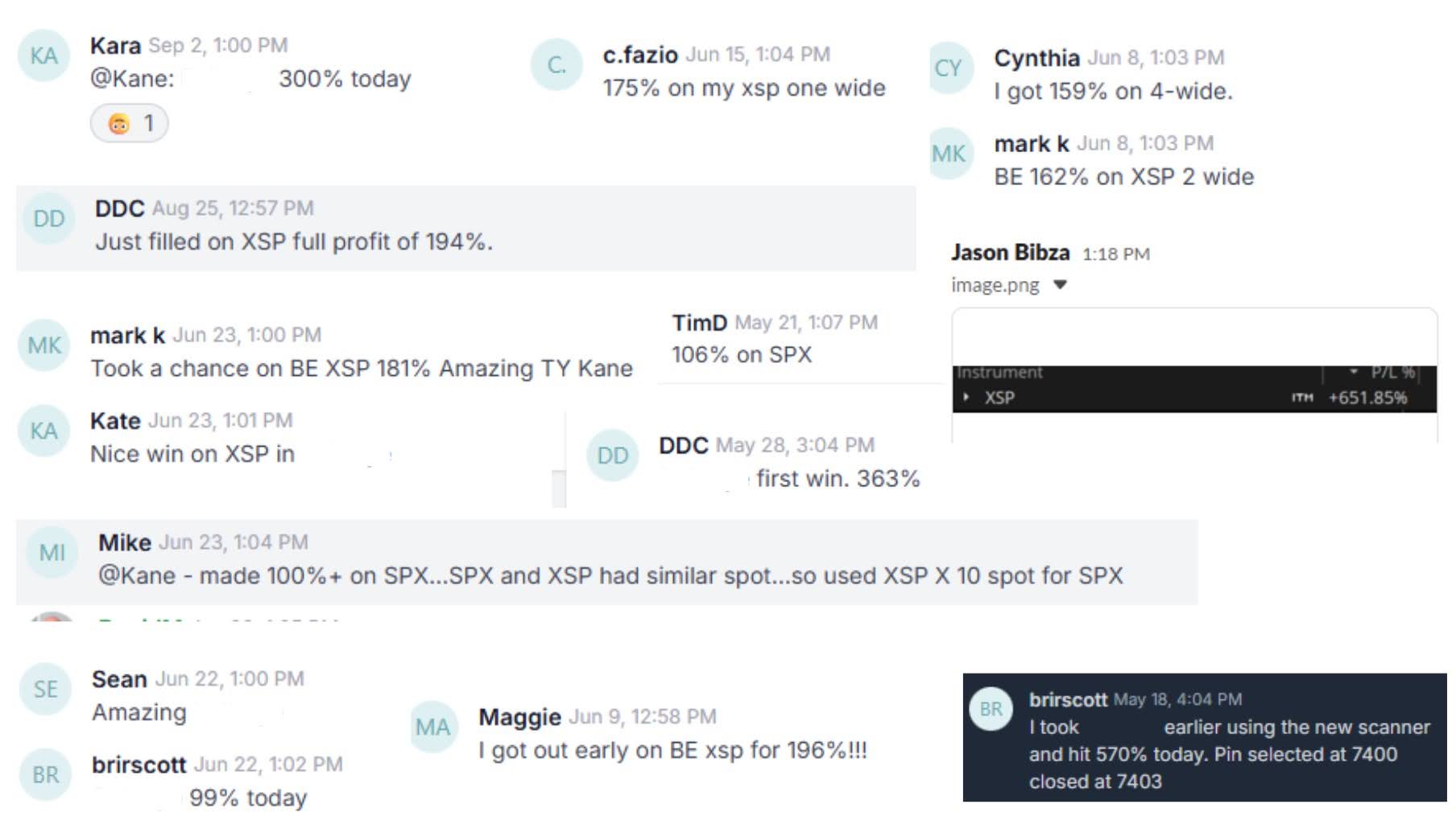
Now, think about what happens on Friday… The final hour of trading that day is the official Witching Hour.
That means the largest options expiration in financial history is colliding directly with the exact same 60-minute window where our phenomenon shows up.
When $9.6 trillion gets untangled right as the market closes, the potential for rapid, short-term payouts goes through the roof.
That is why Roger Scott and I are going live at noon ET on Wednesday.
While I cannot make any guarantees in the market…
We are sitting down to show you how this phenomenon works, why it gives us an advance look at the potential closing prices…
And how you can get in position for the next One Hour Jackpot before Friday’s historic wave hits.
If you’d like to be in place for this historic trade… Tap here to lock in your seat for Wednesday’s live reveal.
We develop tools and strategies to the best of our ability, but no one can guarantee the future. In LIVE trading alerts in real time since April 2026, the result is a 65.4% win rate with an average return, winners and losers included, of 21.64% and an average win of 85.17% over a 1 day hold time. Trade at your own risk.