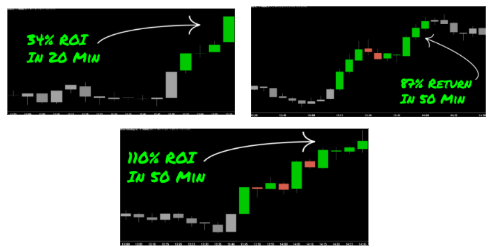
🚨I’ll be live at 11 a.m. ET🚨
My usual Opening Playbook session is canceled today but I’ll reveal the options force we track to anticipate the S&P 500’s close to find potential one-hour trades and more at 11 o’clock [tap to join us]!
There’s something happening in my market regime analysis that tells us a lot about where we are right now.
I run a two-score system to gauge market conditions. Think of it like getting a second opinion — one score might catch something the other misses. Right now, the top score shows mild bull market while the bottom score is neutral.
That sounds OK, but the top score is one small move away from flipping bearish.
Over the last few weeks, that score has moved from strong bull to bull, then to bear and back to mild bull. Meanwhile, the bottom score has remained neutral. This isn’t random noise.
There’s a specific reason it’s happening.
The MA50 Problem Nobody’s Talking About
One of the key signals tracked by the top score is the 50-day moving average. We’ve crossed back and forth over the MA50 several times recently, causing the score to flip with each move.
This tells me we’re in a transitional regime. The market hasn’t decided what it wants to be. When regime indicators don’t align, that’s not a bug in the system — it’s the system revealing instability.
The point isn’t to wait for perfect agreement. It’s to recognize that conflicting signals require a different approach. Transitional regimes punish traders who act as if the trend is obvious.
Build the Boundaries Before Entering
In this environment, every trade needs a defined decision zone. If price stays inside the planned max-gain area, I can hold the position rather than reacting to every small move. If price breaks the boundary, I already know whether to reduce risk or exit.
That plan should identify the entry, desired profit zone and invalidation level before the order is placed. It turns an uncertain market into a manageable decision tree…
Stay inside the boundaries and hold, or break them and act.
Risk also needs to be calculated up front. For a debit spread, the amount paid is generally the maximum capital at risk. If the debit is $189, I treat that $189 as the risk before entering and size the position accordingly. I also set a maximum acceptable debit rather than chasing the trade if pricing moves against me.
The choice between puts and calls should support the setup, not reflect a permanent directional bias. In some cases, structuring the trade with puts makes the risk easier to define than using calls.
The right structure is the one that expresses the idea while keeping the debit, exit point and maximum loss clear.
The conflicting scores aren’t telling me to sit on my hands. They’re telling me to use smaller positions, tighter boundaries and strategies that don’t require the market to cooperate. The scores will eventually align.
Until then, trade the environment you’re actually in — not the one you wish you were in.
Kane Shieh
Kane Shieh Trading
Follow along and join the conversation for real-time analysis, trade ideas, market insights and more!
Important Note: No one from The TradingPub team or Kane Shieh Trading will ever contact you directly on Telegram.
*This is for informational and educational purposes only. There is inherent risk in trading, so trade at your own risk.
P.S. Want FREE Access to Roger’s No. 1 Day Trading Tool?
The same tool that spots stocks that Wall Street is likely buying at that very moment…
Ready to take shots at quick moves in minutes?